
ATV Bali
Complete ATV Bali Information Guide
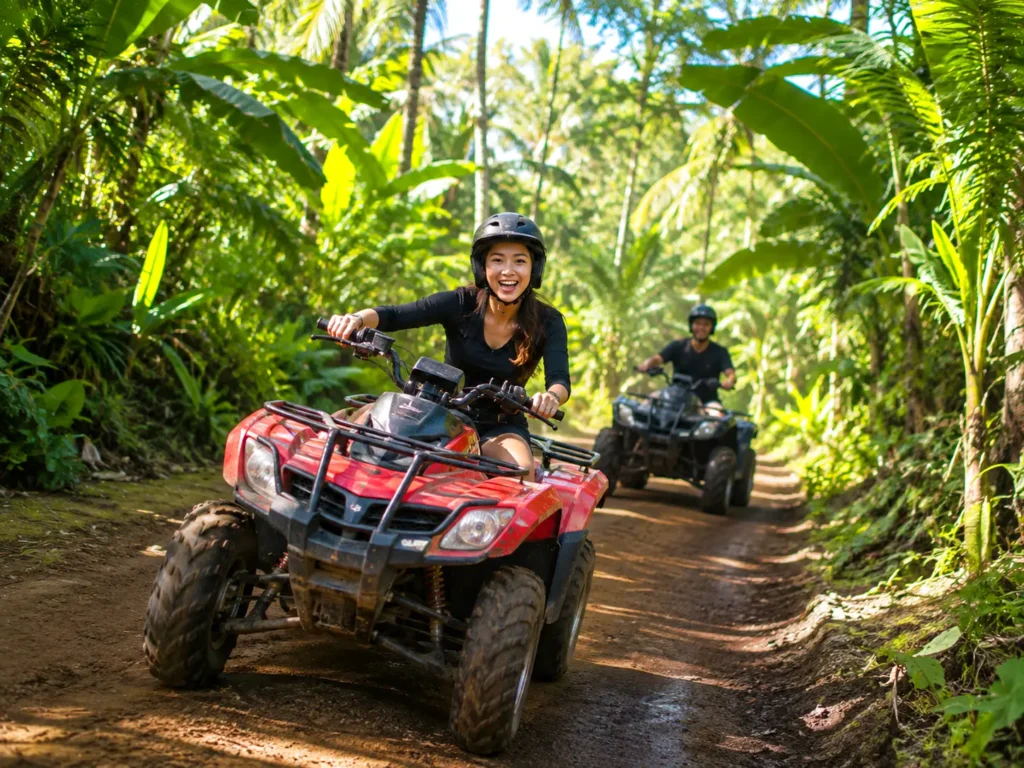
Most provide about 60–90 minutes of riding and accept beginners after a briefing. They are worth considering if you want mud, water crossings and varied terrain—and do not mind becoming wet and dirty.
ATV BALI
Explore This Guide
Jump directly to the information you need.
Choosing the Right ATV Experience
Choose the route first, then compare the offer. The right option depends on the terrain, actual riding time, single or tandem setup, transfers and rider eligibility - not simply the lowest advertised price.
This guide helps you decide which type of ATV experience suits you, what a realistic price includes, whether the activity is appropriate for your family and what to confirm before paying. The decisive differences are the actual route, riding minutes, vehicle type, group size, age policy, safety standard and transfer arrangement—not the most dramatic photograph in the listing.
ATV Bali Quick Facts
| Practical detail | What to expect |
|---|---|
| Main area | Ubud and wider Gianyar, especially Payangan, Taro, Tegallalang and villages south of Ubud |
| Alternative terrain | Tabanan black-sand beaches, Kintamani volcanic ground and selected Sidemen or South Bali tracks |
| Typical riding time | About 60–90 minutes; selected routes advertise up to two hours |
| Total time at the base | Usually around 2–3 hours including registration, briefing, changing and showering |
| Typical standard solo price | Approximately IDR 500,000–1,200,000; low online promotions and premium products can fall outside this range |
| Ride formats | Single ATV or tandem ATV; UTV and jungle buggy products are different vehicles |
| Experience required | Usually none, but route difficulty varies |
| Driving licence | Normally not requested on a controlled off-road tour; confirm any public-road section |
| Age rules | Operator-specific; solo minimums commonly fall around 13–16, while younger children may be accepted only as tandem passengers |
| Normal essentials | Guide, briefing and helmet; boots, lockers, shower, towel, lunch and insurance vary |
| Best time | Morning for lower heat, easier traffic planning and more time to handle weather changes |
| Advance booking | Recommended for transfers, families, groups, tandem rides and a particular track |
Which ATV Experience Is Right for You?
| If you want... | Start with... |
|---|---|
| The classic jungle, mud and rice-field experience | Ubud / Gianyar |
| Black-sand beach and more open coastal scenery | Tabanan / Kerambitan |
| Black lava and volcanic terrain | Kintamani |
| One adult driving with a suitable passenger | Tandem ATV — confirm passenger age and combined weight limit |
| Side-by-side seating and car-like controls | UTV / jungle buggy — confirm the exact vehicle and route |
Is ATV Riding in Bali Worth It?
ATV riding is worth considering when you want a guided adventure with more physical involvement than sightseeing but no previous off-road experience.
It is particularly suitable when:
- You want active outdoor time. Steering through mud, slopes and water is more engaging than being driven.
- You enjoy getting dirty. Mud, splashes and wet clothing are normal parts of many routes.
- You want a shared group activity. Friends, couples and older families can ride in a guided convoy.
- You prefer a structured beginner experience. Most standard tours include basic instruction and a guide.
It may be better to skip it when:
- You expect independent exploration. Most rides follow a guide at a controlled pace.
- You dislike vibration, jolts or uneven ground. Even an easy route can be physically tiring.
- You want quiet nature observation. Engines, groups and designated photo stops change the atmosphere.
- You have a relevant medical condition. Pregnancy and significant back, neck, heart, balance or mobility problems are common reasons not to participate.
The activity is primarily an off-road ride, not an efficient way to tour Ubud. Choose it for the terrain and driving experience rather than for access to famous attractions.
ATV & Vehicle Types in Bali
ATV, Quad Bike, UTV and Jungle Buggy: What Is the Difference?
ATV and quad bike normally describe the same straddle-seat vehicle, while a UTV or jungle buggy has side-by-side seating, a steering wheel, pedals, seat belts and usually a protective cage.
| Vehicle | Seating and controls | Best for |
|---|---|---|
| ATV / quad bike | Rider straddles the seat; handlebars and thumb or twist throttle | More direct, physical riding and narrow trails |
| Tandem ATV | One driver with one passenger behind, only on a vehicle intended for two people | Couples or a suitable child with an adult driver |
| UTV / side-by-side | Two or more occupants sit beside each other; steering wheel, pedals, seat belts and cage | Visitors who prefer car-like controls or shared seating |
| Jungle buggy | Usually a recreational side-by-side or buggy; specifications vary by operator | Purpose-built circuits and visitors wanting a wider, more stable-feeling vehicle |
Bali listings sometimes use these terms loosely. A title saying “ATV buggy” does not tell you which vehicle you will receive. Ask for a current photograph, engine size only if it matters to you, seating layout, number of seat belts, steering method and whether the quoted price is per person or per vehicle.
A larger engine does not automatically create a better tour. Track quality, vehicle condition, safe group management and actual riding time usually matter more.
Best ATV Areas in Bali
Ubud and wider Gianyar offer the largest choice, but the best location depends on whether you want jungle mud, a tunnel-and-waterfall course, open beach riding or volcanic terrain.
| Area | Typical character | Main limitation |
|---|---|---|
| Payangan, Taro and north of Ubud | Jungle, mud, rice fields, rivers, slopes and selected cave or waterfall sections | Long transfer from southern resorts; tracks vary greatly |
| Singapadu, Celuk, Silakarang and south of Ubud | Village scenery, rice fields, plantations, mud and purpose-built features | “Ubud” branding may hide the exact village and route |
| Tabanan and Kerambitan | Black-sand beach, coastal villages, rice fields and wider open sections | Longer journey for many visitors; beach access can depend on conditions |
| Kintamani | Black lava, volcanic sand and open mountain scenery | Dustier and less tropical than a classic Ubud jungle route |
| Sidemen and East Bali | Quieter countryside, rice fields and rural landscapes | Fewer choices and a substantial transfer from South Bali |
| Selected South Bali tracks | Mud circuits and shorter access from some southern areas | Less of the Ubud jungle atmosphere shown in many advertisements |
MAIN JUNGLE & MUD ATV AREA
Ubud and Gianyar
This is the safest default choice when you want the classic Bali ATV experience. The region contains many operators, but there is no single “Ubud ATV track”. Routes are spread across different villages and may include natural terrain, purpose-built mud sections, carved photo features, tunnels or waterfalls in very different proportions.
BLACK-SAND BEACH ATV AREA
Tabanan Beach Routes
Choose Tabanan when open coastal scenery matters more than jungle mud. Established routes combine black-sand beach with village and rice-field sections. Confirm the amount of actual beach time, the plan if tide or weather changes access and whether transport is included.
VOLCANIC ATV AREA
Kintamani Black Lava
Choose Kintamani for volcanic views and black-lava terrain. It feels more open and rugged than an Ubud forest route and can be dusty in dry conditions. Check whether the product is a true rider-controlled ATV experience or a jeep tour with an ATV add-on.
Do not select a route only because a listing shows one waterfall or tunnel photograph. Ask which features are guaranteed on the package you are booking and how much of the ride is genuine trail rather than a short photo loop.
Planning Your ATV Experience
Plan the route, vehicle format and transport together. A low headline price is not useful if the track, actual riding time or transfer arrangement does not match what you want.
How Much Does an ATV Ride in Bali Cost?
A standard solo ATV ride commonly costs about IDR 500,000–1,200,000, while premium vehicles, beach products and fully inclusive packages can cost more.
Published prices reviewed in August 2026 show a wide market:
| Product type | Realistic price indication |
|---|---|
| Low promotional marketplace offer | Sometimes below IDR 500,000; verify ride time, route, vehicle and inclusions carefully |
| Standard self-arrival solo ATV | Approximately IDR 500,000–900,000 per rider |
| Established or premium solo route | Approximately IDR 900,000–1,200,000; selected high-capacity vehicles can exceed IDR 2,000,000 |
| Tandem ATV | Often approximately IDR 850,000–1,800,000 per vehicle for two people |
| Private transfers or combination day | Varies by hotel area, group size, activities and whether pricing is per person or per car |
These are comparison ranges, not fixed island-wide prices. A cheap listing can be good value, but it may exclude transport, shorten the route or use a different track from the photographs. A premium price may reflect a larger vehicle and polished facilities rather than a longer ride.
Before paying, confirm:
- Whether the price is per person or per ATV.
- Whether tandem means one price for two people.
- The actual riding minutes.
- The exact track and vehicle class.
- Whether tax, equipment, lunch, towels, lockers and insurance are included.
- Whether hotel transfer is private, shared, optional or excluded.
- Whether photographs and video are included or sold separately.
How Long Does an ATV Ride Take?
Most Bali ATV products provide about 60–90 minutes of actual riding, even when the complete booking is described as a half-day experience.
Allow approximately:
- 20–40 minutes: Registration, changing, briefing and practice before the ride.
- 60–90 minutes: Typical engine-on riding time.
- 30–60 minutes: Showering, changing, lunch and waiting after the ride.
- Five hours or more: A realistic door-to-door commitment from many southern resorts.
- Six to ten hours: ATV combined with rafting, sightseeing or several activities.
A “three-hour tour” may include transport and preparation rather than three hours of riding. Ask for the scheduled engine-on time and whether long photo stops are included within it.
Single ATV, Tandem ATV or UTV?
Choose a single ATV when each adult wants to drive; choose tandem when one suitable passenger prefers to ride behind an experienced adult on a vehicle designed for two.
| Choice | Main advantage | Confirm before booking |
|---|---|---|
| Single ATV | Independent control and more active riding | Minimum age, physical ability and whether the vehicle is adult-sized |
| Tandem ATV | Allows one driver to carry one passenger | Vehicle is built for two, combined weight limit and passenger minimum age |
| UTV / buggy | Side-by-side seating, seat belts and car-like controls | Number of seats, who may drive and whether the route differs from the ATV course |
Tandem normally does not mean both guests are guaranteed to switch drivers. Two adults sharing one ATV can also be less comfortable on steep or narrow terrain. Confirm the operator’s combined weight limit and whether the passenger has proper footrests and a designated seat.
When Is the Best Time to Ride?
Morning is usually the most practical time because temperatures are lower, traffic planning is easier and there is more time to respond if weather changes.
| Conditions | What changes |
|---|---|
| Dry period | Firmer tracks, less mud and more dust; easier for many beginners |
| After light rain | More mud, water and slippery sections; often the experience many riders expect |
| Heavy rain | Poor visibility, deeper water, damaged trails and possible route changes or delays |
| Hot afternoon | More heat exposure and a greater chance that traffic delays affect the rest of the day |
ATV tours often continue in ordinary rain, but that does not mean every condition is safe. Confirm the operator’s cancellation and rescheduling policy before booking, especially during Bali’s wetter months. Beach routes also need a clear plan for tide and coastal conditions.
What Should You Wear and Bring?
Wear old, comfortable clothing that can become completely wet and muddy, with secure closed footwear or the operator’s riding boots.
Bring:
- A full change of clothes, including underwear.
- A towel if the booking does not provide one.
- Secure footwear and socks.
- Sunscreen and drinking water.
- Insect repellent for forest routes.
- A waterproof pouch only if the operator permits you to carry a phone.
- Cash for optional photographs, food or locker charges.
Avoid white clothing, loose jewellery, unsecured sunglasses, flip-flops and anything you would be upset to stain or lose. A waterproof phone case does not prevent the whole phone from being dropped, crushed or lost in mud.
What Facilities Are Usually Available?
Most established ATV bases provide changing and shower facilities, but cleanliness, privacy and included items vary.
Depending on the operator, you may find:
- Toilets, changing rooms and showers.
- Lockers or bag storage.
- Rubber boots, helmets and sometimes goggles or gloves.
- Towels, soap and basic wash products.
- A simple lunch, welcome drink or bottled water.
- Photography and video sold after the ride.
Bring your own change of clothes even when showers are included. Do not leave passports, large sums of cash or valuable electronics in unsecured storage.
How Do Hotel Transfers Work?
Transfers are often optional and can add more time than the ATV ride itself, especially from South Bali to a route north of Ubud.
One current Ubud-area listing estimates roughly 20 minutes from central Ubud, one hour from Sanur or Denpasar, 1.5 hours from Kuta, Seminyak or Canggu, and two hours from Jimbaran or Nusa Dua. Treat these as planning estimates only; the exact track, pickup route and traffic can change them substantially.
Confirm:
- The exact pickup area and surcharge.
- Private or shared transport.
- The vehicle capacity and child-seat availability.
- The expected pickup and return window.
- Whether the driver waits during the activity.
- Whether a combo activity is at the same base or requires another drive.
Self-arrival is often cheaper when you already have a private driver for the day. App-based taxis may reach many bases, but arranging the return from a rural location can be less predictable.
Should You Book ATV Bali in Advance?
Advance booking is sensible when you need transport, are travelling with children or want a specific route, vehicle or start time.
Book ahead when:
- You need hotel pickup.
- You require written confirmation for a child.
- You want tandem, UTV or a particular engine class.
- You are travelling during a busy holiday period.
- You are combining ATV with rafting or sightseeing.
- Your day cannot absorb a change in start time.
Walk-in bookings may be possible, but arriving first removes most of your ability to compare the track, price and safety conditions. Obtain the exact operator name, map pin, riding duration and final inclusions in writing.
Are ATV Combination Packages Good Value?
A combination package can be efficient when the second activity is nearby and you genuinely want both, but separate locations and transfers can turn it into a long day.
Common combinations include:
- ATV and Ayung River rafting.
- ATV and Bali Swing.
- ATV and zip-line.
- ATV with Ubud sightseeing and a private driver.
- Beach ATV with Tanah Lot or a Tabanan stop.
| Check | Why it matters |
|---|---|
| Distance between activities | “Ubud combo” does not mean both experiences share one base |
| Actual duration of each activity | Package length can be dominated by transport and waiting |
| Changing and lunch time | Rushing directly from mud to another activity is uncomfortable |
| Weather policy | One activity may operate while the other is cancelled |
| Refund allocation | A partial cancellation may not produce a clear partial refund |
ATV and rafting are the most natural full-day pairing around Ubud. A private driver is often the cleanest solution when you want to add sightseeing because it avoids forcing unrelated stops into a fixed package.
Safety & Suitability
ATV suitability depends on route difficulty, vehicle fit, rider age, physical condition, protective equipment and how the operator manages the group.
Is ATV Bali Suitable for Beginners?
Yes, many Bali ATV tours are designed for first-time riders, but “beginner-friendly” does not mean every track is easy in every weather condition.
A proper introduction should cover:
- Starting, stopping and braking.
- Throttle control and steering.
- Body position on slopes and turns.
- Safe distance from the next ATV.
- What to do if the vehicle stalls or becomes stuck.
- The guide’s hand signals and no-overtaking rule.
Use the practice area before committing to the trail. If you cannot steer, brake confidently or reach the controls comfortably, ask to switch to tandem, a different vehicle or an easier route. A reputable operator should not pressure you to continue.
Is ATV Riding in Bali Safe?
ATV riding involves genuine rollover, collision and fall risks, but careful operator selection, appropriate equipment and controlled riding reduce avoidable danger.
Before starting, check for:
- A correctly fitting, securely fastened helmet. A loose adult helmet is not suitable for a small child.
- Suitable footwear and eye protection. Boots are commonly provided, but goggles are not universal.
- Working brakes, throttle and steering. Report unusual movement, damage or a sticking control before departure.
- A practical briefing and test ride. Watching another rider is not a substitute for practising yourself.
- Manageable group spacing. Riders should not be pushed into bunching closely on slopes or water sections.
- A genuine two-person vehicle for tandem riding. Do not carry a passenger on an ATV designed only for one rider.
- A clear bad-weather plan. Heavy rain, flooding, lightning or unsafe trail damage should lead to a delay, route change or cancellation.
Do not ride after alcohol or drugs. Pregnant visitors and people with significant back, neck, heart, balance or mobility conditions should normally choose another activity. If you have had recent surgery or are uncertain about a medical issue, obtain appropriate medical advice before booking.
“Insurance included” is not enough information on its own. Ask what the policy covers, which ages are eligible, whether an excess applies and which conduct or medical conditions invalidate coverage.
Can Children Join an ATV Tour?
Children can join selected tours, usually as tandem passengers, but there is no single Bali-wide minimum age and marketing policies vary considerably.
Published operator rules commonly begin around ages five to seven for a tandem passenger and around 13–16 for a solo driver. These numbers are not a guarantee of suitability. Independent ATV safety guidance also states that riders under 16 should use age-appropriate youth vehicles rather than adult-sized ATVs.
Parents should obtain written confirmation of:
- The minimum passenger and solo-driver ages.
- The child’s insurance eligibility.
- The availability of a properly fitting helmet.
- Whether the tandem ATV is designed for a passenger.
- The combined weight limit and secure footrests.
- Whether difficult trail sections can be bypassed.
Age alone is not enough. A child must be able to sit securely, keep feet on the footrests, wear the helmet correctly and remain calm around engine noise, mud, steep ground and sudden movement. Very young children are better suited to another family activity.
Do You Need a Driving Licence?
A driving licence is normally not requested for a guided ATV tour conducted on a controlled private or designated off-road route.
This does not create permission to drive an ATV freely on Bali’s public roads. Ask whether the route includes any public-road section and what licence and insurance conditions apply there. A tour provider accepting your booking is not proof that your own travel insurance covers the activity.
How Do You Choose a Reliable ATV Operator?
Choose on route clarity, vehicle condition and safety management rather than the largest engine claim or deepest advertised discount.
Before paying, obtain clear answers to these questions:
- What is the operator’s name and exact map location?
- How many minutes will the ATV actually be moving?
- Which route features are included in this package?
- Is the price per rider, per tandem ATV or per UTV?
- What are the passenger, solo-driver and insurance age limits?
- Which helmet, footwear and protective equipment are provided?
- Can beginners bypass a difficult section?
- What happens after heavy rain or if the trail becomes unsafe?
- Are showers, towels, lockers, lunch and photographs included?
- What exactly does the insurance cover?
Be cautious when the seller will not identify the actual operator, uses several route names interchangeably or cannot explain whether a child rides on an adult ATV. Reviews are useful, but read recent comments about vehicle breakdowns, group size, briefing quality, waiting time, track congestion and the accuracy of the advertised route—not only whether riders had fun.
Frequently Asked Questions
Do you need to know how to ride a motorbike?
No. The controls are different and most beginner tours teach the basics. Motorbike experience can help with throttle sensitivity and body position, but it does not replace an ATV briefing.
Will you get completely muddy?
Often, but not always. Mud depends on the route, recent rain and how aggressively the rider enters water sections. Assume your clothing and footwear will become dirty even on a relatively dry day.
Can two adults share one ATV?
Some operators allow it on designated tandem vehicles, subject to a combined weight limit. It can be less comfortable and less agile than two single ATVs, especially on steep terrain.
Are ATV photographs included?
Usually not unless the listing says so. Many tracks position photographers at mud, cave or waterfall sections and sell digital files afterwards. Ask for the price before the ride if photographs matter to you.
Can you ride at your own speed?
Normally only within the limits of the guided group. Faster riders may be placed near the front, but overtaking and independent departure from the route are usually prohibited.
What happens if an ATV breaks down?
The guide should stop the group or arrange a replacement vehicle. Ask before departure how breakdown time is handled and whether lost riding time is added back.
Can you take a camera or action camera?
Only if the operator permits it and the mount is secure. Hand-holding a phone while driving is unsafe. Helmet or vehicle mounts may also be restricted, so confirm before arriving.
Related Experiences
The most natural adventure combination around Ubud when you want a full active day.
A less physical add-on for visitors who want scenic views and photographs after the ride.
A practical sightseeing stop when your ATV route is north of Ubud and you already have private transport.
Final Advice
Choose an Ubud or Gianyar route for the broadest selection and classic jungle-and-mud experience; choose Tabanan for beach scenery or Kintamani for volcanic terrain. Before booking, confirm the exact operator and track, actual riding minutes, single or tandem vehicle, age and insurance rules, transfer arrangement and final price in writing.
Explore the Best Bali 4 U Network
These connected guides and planning resources are useful next steps when an ATV day forms part of a wider Bali itinerary.
Questions About This Guide?
Our editorial team reviews this guide as conditions and operator policies change. If you have a question about the guide, have noticed information that needs correction or would like to share updated local knowledge, suggestions or editorial feedback, please contact us.